PCIe Cable
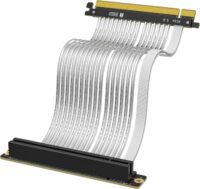
 PCIe CablePCIe 5.0 X16 Graphics Card Extension Cable – VTC-APEBB003HB27-K2
The VITALCONN VTC-APEBB003HB27-K2 is a PCIe 5.0 x16 graphics card extension cable with full 16-lane bandwidth at 32 GT/s per lane. Built with 30 AWG high-frequency copper twin-axial conductors, 85 ohm controlled impedance, and multi-layer shielding. Backward compatible with PCIe 4.0/3.0. Ideal for GPU vertical mounting, multi-GPU workstations, AI servers, and open test platforms.
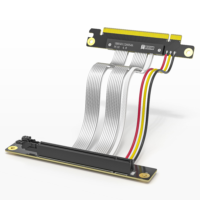
 PCIe CablePCIe X16 4.0 Graphics Card Extension Cable – VTC-APEBB003HB02-K2
The VITALCONN VTC-APEBB003HB02-K2 is a PCIe 4.0 x16 graphics card extension cable with full 16-channel bandwidth. Built with 30 AWG high-frequency copper twin-axial conductors, 85 ohm controlled impedance, and per-pair shielding. Supports 16 GT/s per lane, backward compatible to PCIe 3.0/2.0/1.0. Designed for GPU vertical mounting, multi-GPU workstations, and open test platforms.
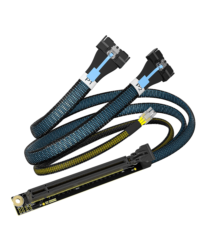
 PCIe CablePCIe X16 to 2x MCIO 8X Splitter Cable Assembly – VTC-APEBEOP3HC02-K2
The VITALCONN VTC-APEBEOP3HC02-K2 is a high-speed PCIe X16 to dual MCIO 8X bifurcation cable assembly. Supports PCIe 5.0 at 32 GT/s per lane, splits a single x16 host port into two independent x8 links. Built with 30 AWG silver-plated copper conductors, 85 ohm controlled impedance, and full-length shielding. Ideal for dual-GPU direct-attach, NVMe storage expansion, and OCP multi-node server architectures.
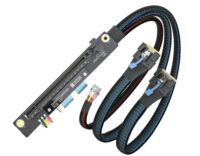
 PCIe CablePCIe X16 to 2x SlimSAS SFF-8654 8i Cable – VTC-APEBEOP30001-K2
The VITALCONN VTC-APEBEOP30001-K2 is a PCIe X16 to 2x SlimSAS SFF-8654 8i splitter cable that divides a single x16 host port into two independent x8 links. Supports PCIe 4.0 at 16 GT/s per lane with 30 AWG high-frequency copper conductors and 85 ohm controlled impedance. Ideal for NVMe storage expansion, GPU enclosures, and disaggregated compute-storage architectures.